REVIEW · MALLORCA
Sóller: Jardines de Alfabia Entrance Ticket
Book on GetYourGuide →Operated by Jardines de Alfabia · Bookable on GetYourGuide
Alfabia is Mallorca’s garden-house time warp. You’ll wander through Arab gardens with a cool, shaded feel, then step into a house over 500 years old where styles stack up across centuries. It’s gorgeous, but timing matters: if you go when flowers are slow, the gardens may feel more green-and-calm than showy.
I love how the grounds are designed to move you along. A wide, triple-lane avenue of plane trees pulls you toward a classic Mallorcan patio, with fountains and hydrangeas adding little “pause and look” moments. One thing to consider: some rooms and the way information is presented can feel less focused to certain visitors, so you’ll enjoy it most if you’re happy to explore at your own pace.
This is also set in a big-deal backdrop. Alfabia sits in the Serra de Tramuntana UNESCO area, so the whole visit feels tied to place, not just a standalone attraction. If you want a half-day to full-day break from beaches, this is a strong choice.
In This Review
- Key highlights worth your time
- Why Alfabia’s gardens and house belong together
- Price and what you’re really paying for ($11 entrance)
- Getting to Alfabia: Palma bus 211 or the Sóller train
- Timing the entry: last entrance is 60 minutes before closure
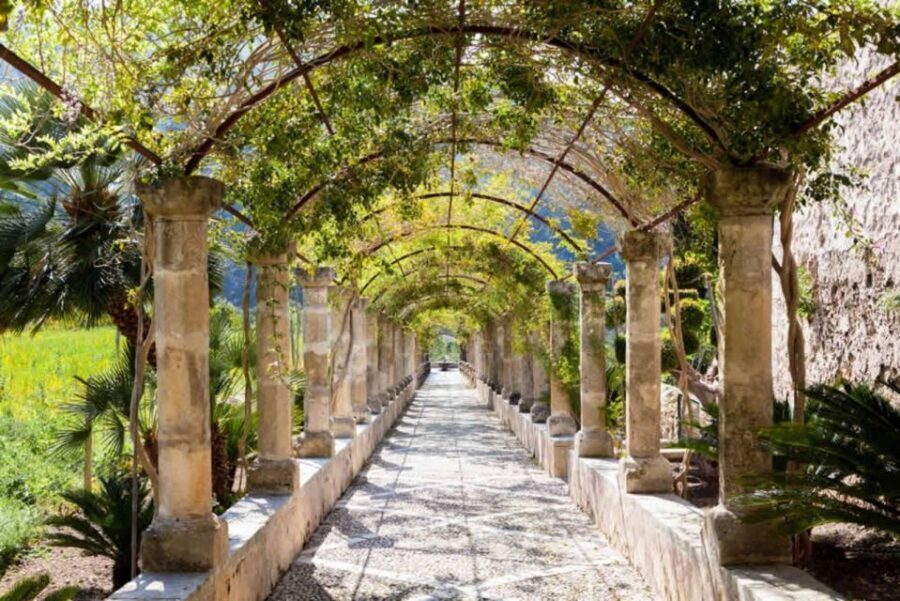
- Arab gardens with an English landscaping twist
- The triple-lane plane-tree avenue to the Mallorcan patio
- Inside the Alfabia house: a style “stack” you can actually see
- What I’d do on-site: a simple, low-stress visiting plan
- Seasonal expectations: hydrangeas and when gardens feel fullest
- The only real downside: presentation can be uneven
- Who should book Jardines de Alfabia?
- Should you book Alfabia in Sóller?
- FAQ
- How much is the Sóller Alfabia entrance ticket?
- How long is the ticket valid?
- What’s included with the ticket?
- What do I get to see at Alfabia?
- Is Alfabia in a UNESCO area?
- When is the last time I can enter?
- Do I need to wear anything during the visit?
- How can I get there from Palma by public transport?
- What’s another way to reach the area besides the bus?
- Can I cancel the ticket?
- Is there a pay-later option?
Key highlights worth your time
- 500+ years inside one house with layers from Roman-Andalusian roots to Arabic, Gothic, Renaissance, Baroque, Roman, Rococo, and even English decoration
- Arab gardens with a British influence in the way the paths and plantings are shaped
- A triple-lane plane-tree avenue that guides you straight to the Mallorcan patio
- Courtyard details that reward slow walking, including fountains and hydrangeas
- UNESCO Serra de Tramuntana setting that makes the whole experience feel anchored in Mallorca
Why Alfabia’s gardens and house belong together
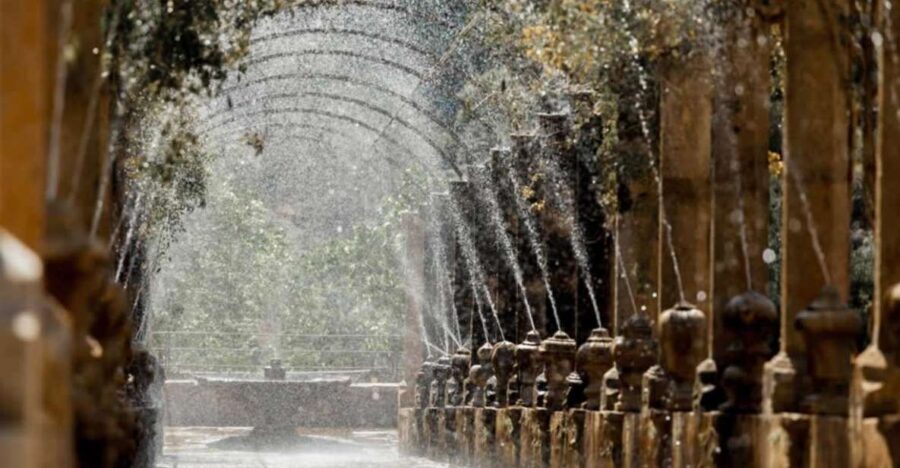
Most attractions pick one thing and then overdo it. Alfabia does the opposite. The magic comes from the pairing: you start outdoors, then the “story” moves inside, where you can see how different eras left their mark.
In the gardens, the atmosphere is cooler and calmer than you might expect in Mallorca. You’re not just staring at pretty plants. You’re walking through a designed sequence—wide avenues, then tighter courtyards, then open patio space—so the experience feels like a gentle route rather than a random stroll.
Then you step into the house and the mood shifts from shaded paths to enclosed rooms. That’s when the styles really click. You’ll see Roman-Andalusian foundations, plus elements described as Arabic, Gothic, Renaissance, Baroque, Rococo, and English decorative touches. Even if you’re not chasing architecture trivia, the point is clear: this isn’t one era frozen in time. It’s a building that kept changing, with older parts respected as it evolved.
Possible drawback to keep in mind: if you’re the type who wants everything to be explained in a tight, perfectly organized way, you might feel a bit frustrated by the presentation. Alfabia’s strength is physical experience—walking the grounds, looking at details—more than it is a neatly packaged lecture.
You can also read our reviews of more tours and experiences in Mallorca

Price and what you’re really paying for ($11 entrance)
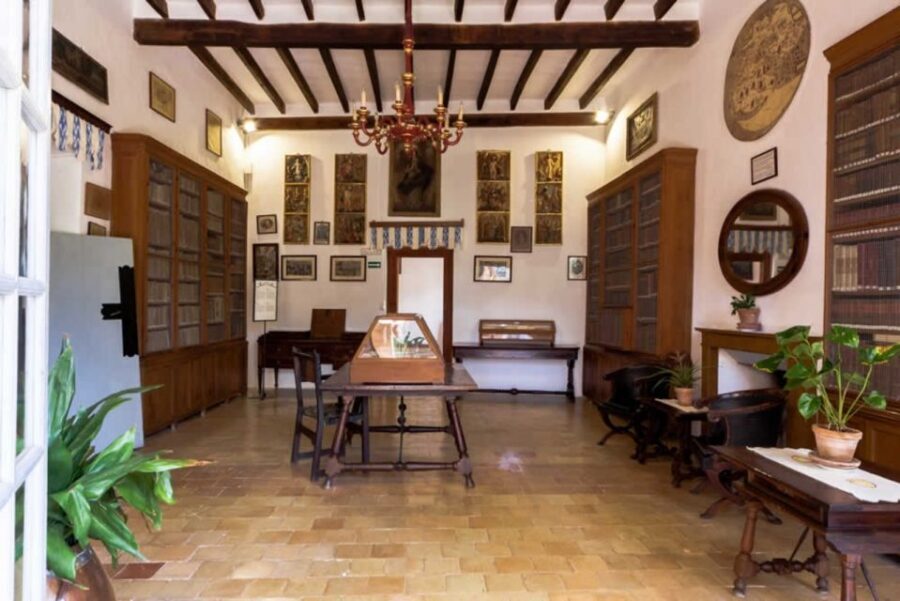
The ticket is about $11 per person and includes entrance fees. For that price, you get access to both the gardens and the house, which is the core reason this works as value.
Here’s how I think about value at places like this:
- If you only wanted the gardens, you’d still likely pay a similar amount somewhere on the island.
- If you only wanted the house, many heritage interiors cost more just for a single building.
- Here, you’re paying for the full “two-part” experience: outdoor cooling + indoor style layers.
So yes, it’s inexpensive. But the real value is quality of the setting. Alfabia isn’t just a stop—it’s a reason to slow down.
Getting to Alfabia: Palma bus 211 or the Sóller train
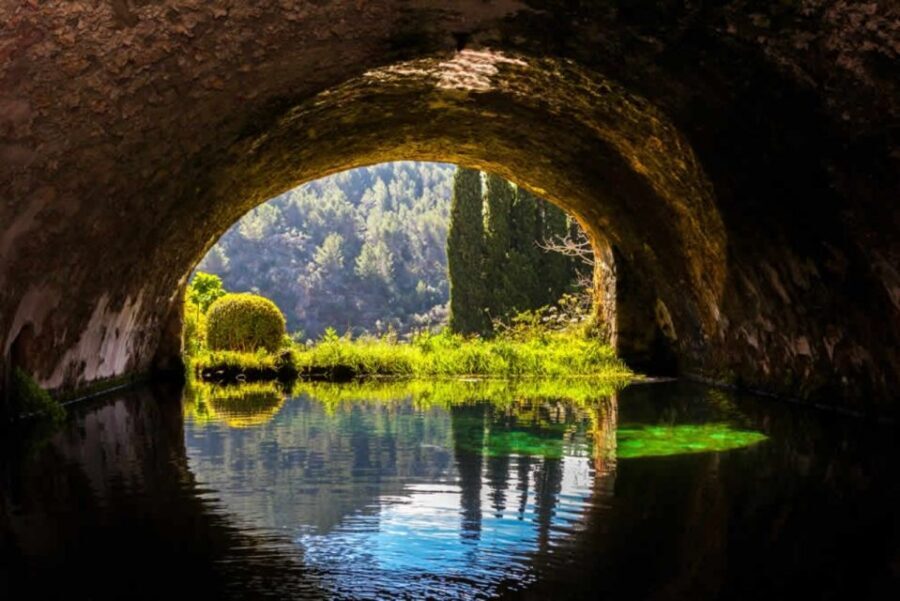
Alfabia is an easy day-trip setup from the Sóller area, especially if you like using public transport.
Option 1: Bus from Palma (Line 211)
You can reach the area using public transportation from Palma via Line 211. The most reliable way to avoid timing surprises is to check the current schedules here: https://www.tib.org/es/web/ctm/autobus/linia/211
Option 2: Sóller Train
If you’re already in the Sóller orbit, the Soller Train is another practical way in. Check departures here: http://trendesoller.com/horarios
Quick practical tip: give yourself extra time when you’re using public transport. You want enough breathing room to arrive before your entry window and still enjoy the gardens without rushing.
Timing the entry: last entrance is 60 minutes before closure
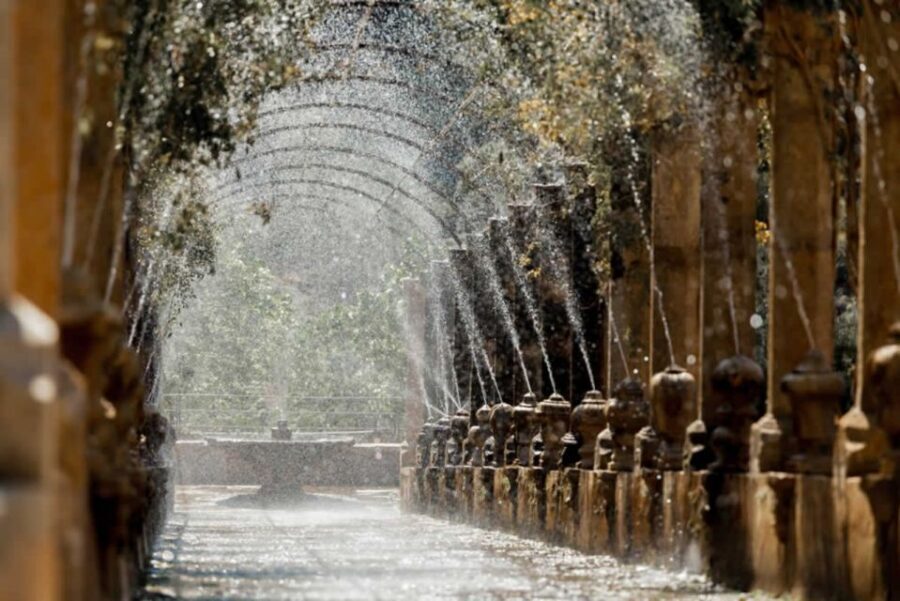
Your ticket is valid for 1 day, and you’ll have a chosen starting time (you’ll see the available times when you check availability). The big timing rule: last entrance is 60 minutes before closure.
That matters because Alfabia rewards a slow pace. If you arrive late, you might miss the indoor portion or feel pushed through the gardens. When in doubt, aim for an earlier entry and treat the visit like a calm walk, not a checklist.
Also note: during the visit, you’ll be asked to wear an identification bracelet. Keep it on until you’re done.
Arab gardens with an English landscaping twist
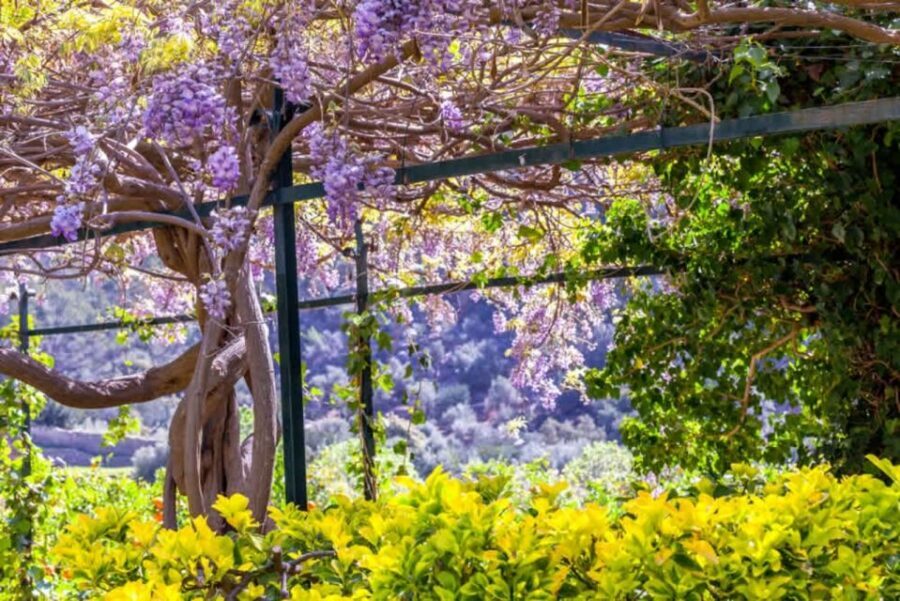
The gardens are where Alfabia starts to feel special. The description you’ll hear again and again is Arab gardens, but the details add a second layer: English landscaping influence.
What that feels like in real life is the structure of the grounds:
- paths that guide you,
- wide open points where you can look ahead,
- and planting that seems arranged for effect as you move through it.
You’ll also notice water features and soft, classic garden plants. Fountains add sound and freshness, and hydrangeas are part of the appeal.
The gardens are a good choice if you want something greener than a typical beach day, but still not a hard-core hike. It’s more about shade, strolling, and visual pauses.
Season reality check: one highlight from reviews is that the gardens can be wonderful even in winter months, but another important note is that flowers can be lighter when the season isn’t right. If you’re visiting in a month when blooms are fewer, the gardens may feel more about structure and shade than flower color. Early spring tends to be the sweet spot for more lively garden energy.





The triple-lane plane-tree avenue to the Mallorcan patio
One of the most specific and memorable garden features is the walk up the main avenue.
You’ll head along a wide straight stretch made of three lanes of large plane trees. That triple-lane layout does two things:
- It creates a strong sense of direction, like you’re being guided toward the heart of the estate.
- It makes the walk feel cooler and calmer because the canopy turns the sun down.
At the end, you reach a traditional Mallorcan patio, where the whole complex opens up visually. This is the kind of place where a quick photo is easy—but the better move is to linger. Patios like this are designed for atmosphere: breezes, shade lines, and that “in-between” space between garden and house.
This is also a good spot to slow down your pace. If you try to speed through Alfabia, you’ll miss what makes it relaxing: that guided rhythm.
Inside the Alfabia house: a style “stack” you can actually see
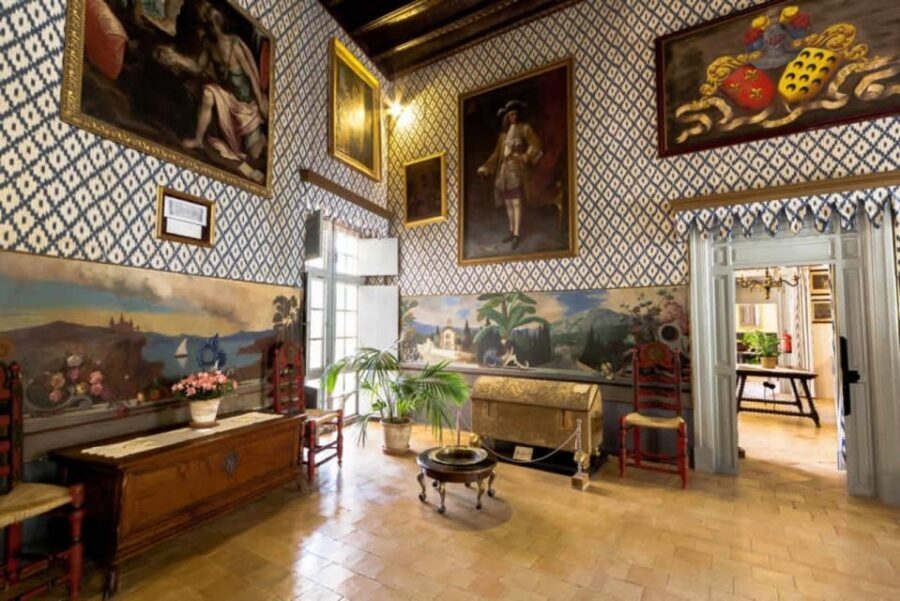
The house is the other half of why the ticket is worth it. You’re stepping into a typical Mallorcan house with corners and traditional atmosphere that lets you connect with the island’s long timeline.
The core idea is that Alfabia isn’t a single-style museum. It’s more like a building that absorbed influences over time:
- Roman-Andalusian roots
- Arabic elements
- Gothic, Renaissance, Baroque, Roman
- Rococo
- and even English decoration
That list can sound overwhelming, but here’s how to use it as a visitor: don’t try to memorize all the labels. Instead, look for contrasts. See what feels older, what feels more formal, what seems more decorative, what feels more “transitional.” In many places, you can literally tell when different eras took over.
A big plus is that the complex is described as having balance—old traces remain, but the whole place doesn’t feel like a chaotic mash-up. If you like architecture and interiors, you’ll probably enjoy the feeling of layers.
If you don’t care about styles in a technical way, you can still enjoy the house for its mood: cool rooms, traditional layout, and details that reward slow looking.
What I’d do on-site: a simple, low-stress visiting plan
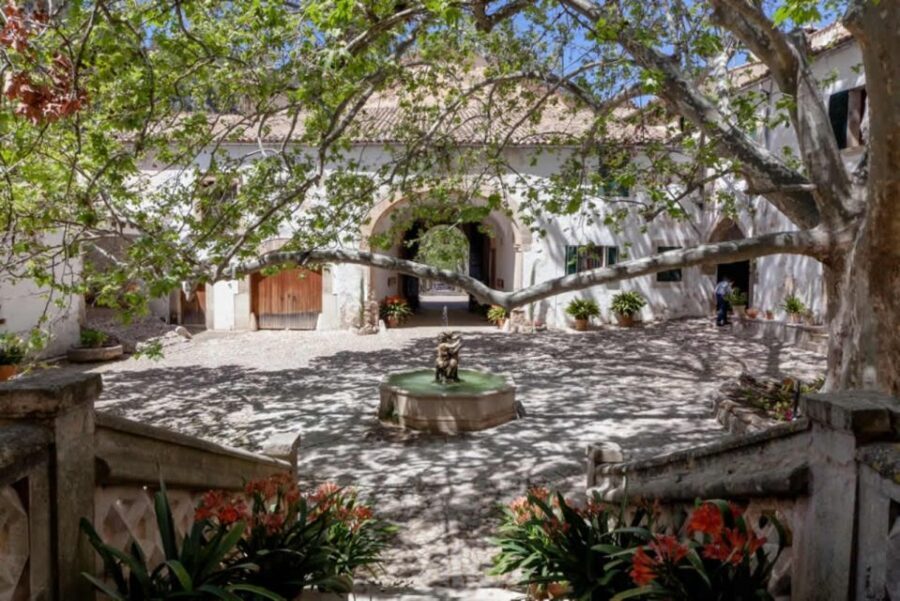
Alfabia is best enjoyed when you treat it like a walk-with-detours. You don’t need to speed through.
Here’s a practical way to structure your time:
- Start in the gardens so you can ease in while it’s cool and shaded.
- Walk the main avenue and stop at points where the fountains and hydrangeas catch your eye.
- When you reach the patio area, slow down. This is where the estate’s layout makes the most sense.
- Then go inside and let the house guide you by curiosity. Pick a few rooms and focus on details instead of trying to see everything.
Photo and pacing tips that usually pay off:
- Don’t just shoot from one angle. Move a few steps and check how the avenue lines frame the patio.
- In the house, look for contrast—lighter decorative elements against deeper, older-looking surfaces.
- If you want the garden atmosphere without crowd energy, an earlier entry is your friend. (You’ll also have more time buffer since last entrance is 60 minutes before closure.)
Seasonal expectations: hydrangeas and when gardens feel fullest
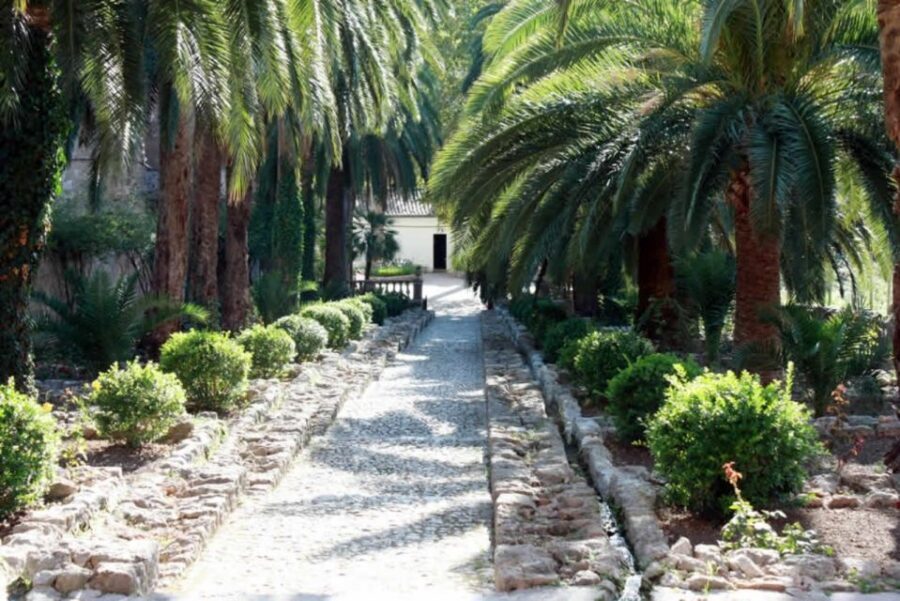
The gardens are attractive across seasons, but the vibe changes.
From the advice you can infer for planning:
- In early spring, you’re more likely to catch everything waking up, including more visual color beyond green structure.
- In winter months, you can still enjoy the place as a calm, structured garden walk, but flower impact may be reduced.
- In months when blooms are limited, the gardens can feel less dramatic, even if the setting is still beautiful and tidy.
So if you care about flowers, plan for early spring if your schedule allows. If you’re going in a quieter season, treat Alfabia as an architecture-and-shadow day, not a bloom festival.
Also keep an eye on ground condition. One disappointment noted is that garden maintenance can vary, with some unhealthy trees mentioned. That’s not something you can predict perfectly in advance, but it’s a reason not to assume the experience will always look identical.
The only real downside: presentation can be uneven
I’m going to be straight: the house and gardens are the star, while the information feel can be uneven for some people.
One negative point mentioned is that the exposition or exhibit feel can lack coherence, and that the welcome may not match the expectations for everyone. That doesn’t mean you can’t have a great visit—it means you’ll get more from Alfabia if you come expecting to explore through spaces, not through a perfectly organized narrative.
If you’re the type who loves to look around first and read later, you’re in the right mindset. If you need guided-style flow to feel engaged, you might want to plan to spend extra time in the rooms that grab you most.
Who should book Jardines de Alfabia?
This is a strong match if you:
- like gardens with structure (not just wildflower wandering),
- enjoy heritage buildings where multiple eras show up in the details,
- want a break from coastal days with something cooler and calmer,
- and enjoy places tied to Serra de Tramuntana UNESCO setting.
It’s also a good solo or couple option. The estate encourages walking and quiet looking, and you can easily shape your own pace.
It might be less ideal if you:
- need a very tightly guided, perfectly explained experience,
- are visiting mainly for peak flower spectacle and your month happens to be low-bloom,
- or have your heart set on gardens that are always at maximum visual condition.
Should you book Alfabia in Sóller?
Yes, I’d book it if you want a memorable, low-stress heritage visit that mixes outdoor calm with indoor architectural layers. For $11, the value is solid because you’re getting both the Arab gardens and the 500-year-old house in one pass, in a UNESCO area.
But book with the right expectations:
- Go earlier in the day if you can, so you don’t feel rushed with last entrance being 60 minutes before closure.
- If your priority is lots of flowers, try to align with early spring when the gardens are at their liveliest.
- If you enjoy exploring first and reading second, you’ll likely have a better time.
If those fit you, Alfabia is one of the most satisfying “one-day” cultural stops on Mallorca.
FAQ
How much is the Sóller Alfabia entrance ticket?
The ticket price is listed at about $11 per person and includes entrance fees.
How long is the ticket valid?
The ticket is valid for 1 day.
What’s included with the ticket?
Entrance fees are included.
What do I get to see at Alfabia?
You can visit the house with over 500 years of history and the surrounding Arab-style gardens.
Is Alfabia in a UNESCO area?
Yes. It’s located in the Serra de Tramuntana UNESCO World Heritage Site.
When is the last time I can enter?
Last entrance is 60 minutes before closure.
Do I need to wear anything during the visit?
You’ll be asked to wear an identification bracelet during the visit.
How can I get there from Palma by public transport?
You can use bus Line 211. Departure times are listed here: https://www.tib.org/es/web/ctm/autobus/linia/211
What’s another way to reach the area besides the bus?
You can use the Soller Train. Departure times are listed here: http://trendesoller.com/horarios
Can I cancel the ticket?
Yes. You can cancel up to 24 hours in advance for a full refund.
Is there a pay-later option?
Yes. You can reserve now and pay later (book your spot and pay nothing today).