REVIEW · MALLORCA
Palma’s Alternative History: A Self-Guided Audio Walk
Book on Viator →Operated by VoiceMap Audio Tours · Bookable on Viator
Palma tells its story in your own footsteps. What makes this audio walk fun is the on-demand pacing—you start, pause, and restart whenever you want—while it keeps guiding you through big Palma landmarks like Parc de la Mar, the Cathedral, and Placa Major area. I also like that it’s powered by a local-style guide, Sandra, so the city feels less like a checklist and more like a lived-in story. One real drawback to keep in mind: the VoiceMap app can be power-hungry, and some phones may struggle with glitches.
This is a smart way to see the old center without buying a bunch of tickets. The walk clocks in around 1 to 1.5 hours, and it ends near Palma town hall. It’s priced at $9.99 per person, which is less about admissions and more about getting your bearings fast.
In This Review
- Key highlights you’ll actually feel on the walk
- Start at Parc de la Mar: where Palma’s sea shows up
- A self-guided audio walk that gives you control
- Following Palma’s alternative history, stop by stop
- 1) The Parc de la Mar setup: Cathedral views plus a modern backstory
- 2) An Art Nouveau monument from the early 1900s
- 3) Can Marcel: a 17th-century house now used well
- 4) Santa Eulalia Church: medieval roots with Baroque inside
- 5) The street shaped by Sa Riera and knightly tournaments
- 6) Plaça de Cort area: Mile Zero feel plus Saint Sebastian on Jan 19
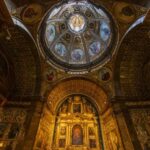
- 7) The Cathedral of Palma (Seu): the crown jewel with a long build
- 8) Almudaina Palace: Arabic past, current royal use
- 9) The 1428 maritime stock exchange: Gothic power, free admission
- Where to pause for real value (not just photos)
- Price and value: why $9.99 can be a bargain here
- VoiceMap app: how to avoid the most common frustrations
- Who should book this audio walk, and who might skip it
- Should you book Palma’s Alternative History audio walk?
- FAQ
- How long is the Palma Alternative History audio walk?
- Where does the tour start?
- Where does the tour end?
- What language is the audio offered in?
- Do I need my own phone and headphones?
- Can I use the audio without cell service?
- Are entrance tickets included for museums or attractions?
- Are any stops free to visit?
- Is it refundable if my plans change?
Key highlights you’ll actually feel on the walk
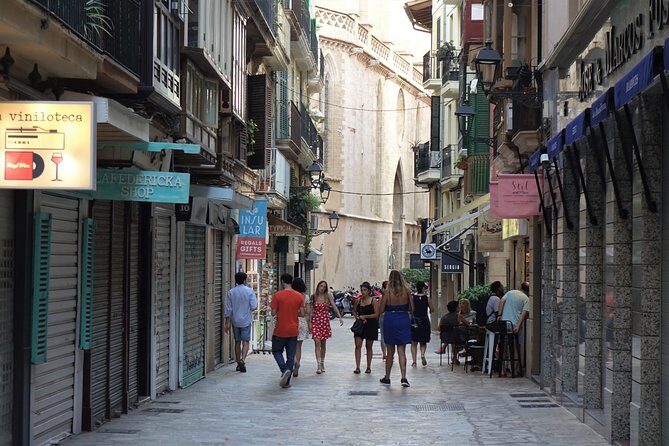
- Self-guided timing: you control start and pauses instead of matching a group schedule
- Sandra’s alternative history angle: the route connects Talayotic roots, the Spanish Inquisition, and old Palma life
- Offline audio and maps: download once, then explore with less stress about signal
- Major landmarks, plus quieter context: you get what to notice at each stop, not just dates
- Free entry stops included in the story: Santa Eulalia Church and the 1428 maritime stock exchange building are free
- An “on paper” simple route that still rewards attention: the narrative helps you spot details you’d miss alone
Start at Parc de la Mar: where Palma’s sea shows up
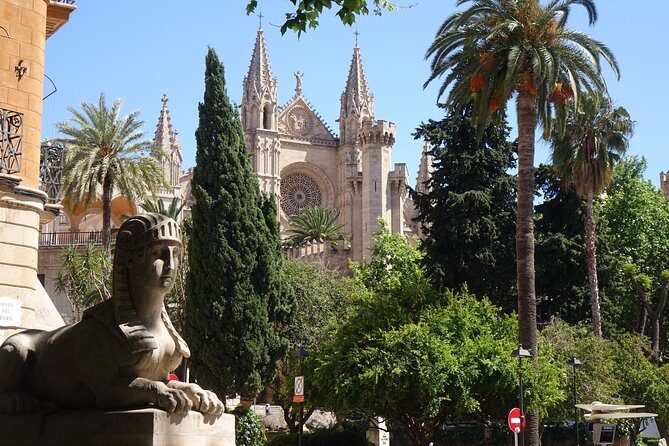
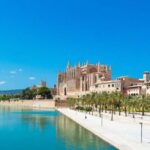
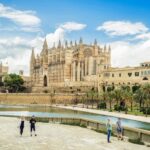
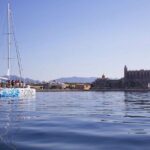
Your walk begins at Parque del Mar (Parc de la Mar), a square that sits right in front of the Cathedral and the Almudaina Palace. It’s the kind of place where the views do half the job: you’re instantly framed by major monuments. The square itself was built over the sea in the 1960s, during Palma’s tourism boom, which is a neat way to set up the theme: this route isn’t only about ancient ruins. It’s also about how Palma reinvented itself.
A big practical plus here: if you’re arriving and need orientation, this is a helpful starting “anchor.” You can spend a few minutes getting your bearings before the first audio track starts.
You can also read our reviews of more walking tours in Mallorca
A self-guided audio walk that gives you control
This experience is built around the VoiceMap app, available on Android and iOS, with offline access to audio, maps, and geodata. That matters because the center of Palma is the kind of place where signal can be hit-or-miss between streets. Offline access means you’re not constantly checking whether your phone is cooperating.
You also don’t need to keep moving. You can pause and resume the audio anytime. That flexibility is huge if you like to stop for photos, duck into a church, or pause to read a sign up close.
One thing you’ll want to plan for: you’ll need your own smartphone and headphones. The tour price covers the lifetime digital access and the app experience, not your devices or anything you might enter.
Following Palma’s alternative history, stop by stop
The route moves through squares, churches, and standout buildings while tying them to wider Mallorca stories. As you listen, Sandra guides you through layers of time—Talayotic culture, the Spanish Inquisition, and the elegant old-city feel that comes later. Here’s what you’ll get from each major stop, and what’s worth your attention.
1) The Parc de la Mar setup: Cathedral views plus a modern backstory
At the start, you’re meant to look outward first—cathedral silhouette, palace presence, that open square feel. Then the audio connects why this spot exists the way it does, including the idea of Palma’s 1960s sea construction during the tourism surge. It’s a quick way to understand that Palma’s “old city” isn’t frozen in time.
Tip: take 2 minutes to stand where you can see both the Cathedral and Almudaina. The audio makes more sense when the monuments are in your frame.
2) An Art Nouveau monument from the early 1900s
Next comes a splendorous Art Nouveau monument built in the early 1900s—one of Palma’s Art Nouveau jewels. This is a good moment in the walk because it breaks the pattern of only medieval and gothic landmarks. It also helps you notice that Palma kept evolving right through the modern era.
What to watch: look up. Art Nouveau rewards upward attention—details in facades are where the character lives.
You can also read our reviews of more guided tours in Mallorca

3) Can Marcel: a 17th-century house now used well
You’ll pass a typical noble Majorcan house originally called Can Marcel, built in the 17th century. Today, it hosts a lounge bar with a rustic, authentic design, and it’s a logical place to pause during the audio. Even if you skip a drink, the building itself gives you a feel for old residential Palma.
Practical angle: if you’re traveling when it’s warm, this can be a comfortable break point.
4) Santa Eulalia Church: medieval roots with Baroque inside
This is one of Palma’s oldest churches, built in the 13th century. The audio gives you the key historical point: before Palma’s Cathedral was completed in 1601, the first kings of Majorca were crowned here at Santa Eulalia.
Inside, you’ll find a Baroque-style decoration, and the best part for planning: the church is free to visit.
When it’s worth slowing down: if the church doors are open, take a minute and let the interior surprise you. The shift from exterior age to interior styling is part of the fun.
5) The street shaped by Sa Riera and knightly tournaments
The audio then points you to a street location tied to the former torrent of Sa Riera, which used to flow through this area and divide the city into two parts. It also mentions that knights’ tournaments were organized along the torrent.
This stop works best if you listen with your eyes open for street layout. Even when the torrent itself is no longer visible the way it once was, the story explains why the city’s structure feels the way it does.
Tip: don’t just walk past. Slow down for 30 seconds and imagine the old water channel.
6) Plaça de Cort area: Mile Zero feel plus Saint Sebastian on Jan 19
The route builds toward Palma’s central square world—places where history and civic life overlap. You’ll finish the audio around Plaça de Cort, which is described as the Mile Zero of Palma and also a square built in the mid-19th century. The audio also ties it to the annual feast day of Saint Sebastian, celebrated on January 19, honoring Palma’s patron saint.
This is where the story lands in modern civic rhythm: you’re near the town hall area, in the center of the city’s daily public life.
Photo tip: stand at the open edges of the square and look for “lines” in the street layout that pull you into the historic center.
7) The Cathedral of Palma (Seu): the crown jewel with a long build
You’ll get the Cathedral of Palma—also called the Cathedral of Light, or Seu. Construction started in 1230 and finished 371 years later, in 1601. The audio frame is pride and permanence: the Cathedral is treated as a major identity marker for Majorcans.
Even if you’re not a “church architecture” person, the long timeline makes the building feel less like a museum object and more like a centuries-long project.
What to consider: if you’re visiting when light hits the facade the way you like, plan a quick stop longer than your average photo break.
8) Almudaina Palace: Arabic past, current royal use
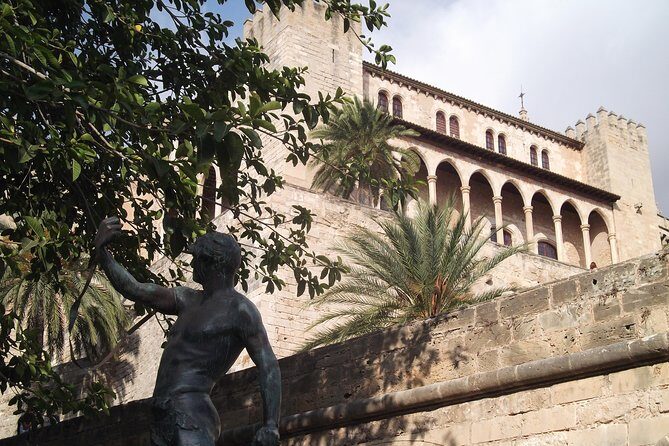
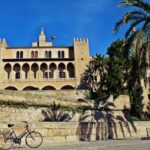
Next is the Palau Reial de l’Almudaina, an Arabic king palace built in the 10th century, described as the oldest monument of Palma. Today it functions as the official King residence, and the audio notes that King Philip VI receives official visitors there, including presidents from other countries. It’s also a museum and a military building.
This stop is a reality check that history keeps working. It’s not only a backdrop for pictures.
Practical note: the audio gives context, but entry rules aren’t specified here—so if you’re hoping to go inside, plan for the possibility that you might need separate arrangements.
9) The 1428 maritime stock exchange: Gothic power, free admission
Finally, you’ll reach a beautiful Gothic building constructed in 1428, described as the former maritime stock exchange. It’s open to the public, and admission is free.
This is a strong ending point because it ties Palma’s identity to the sea, trade, and the city’s money-brain, not just its kings and cathedrals. If you like learning what a city built and sold, this stop helps.
Where to pause for real value (not just photos)
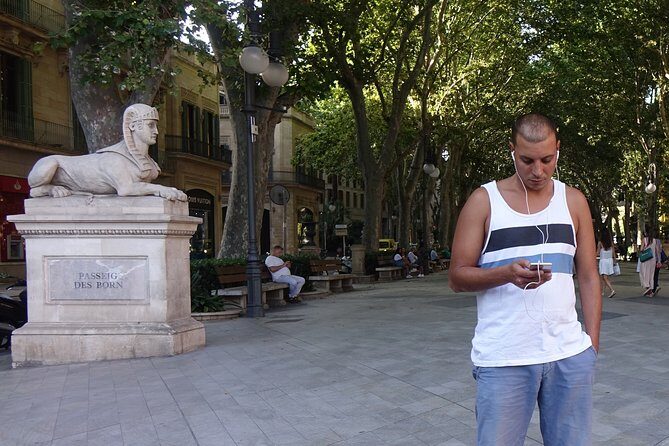
This route is short enough that you can afford to slow down at the right moments. You’ll get the best payoff when you pause for three kinds of stops:
- Relational views: when you can see Cathedral and palace framing (early in the walk)
- Interior moments: at Santa Eulalia Church, where the interior decoration is part of the story
- Civic squares: near the end at Plaça de Cort, where history turns into public space
Also, since the audio lets you pause, you can match the walk to your energy level. If your legs are tired, you don’t have to “push through” just to avoid missing the next narration segment. You can keep the pace human.
Price and value: why $9.99 can be a bargain here
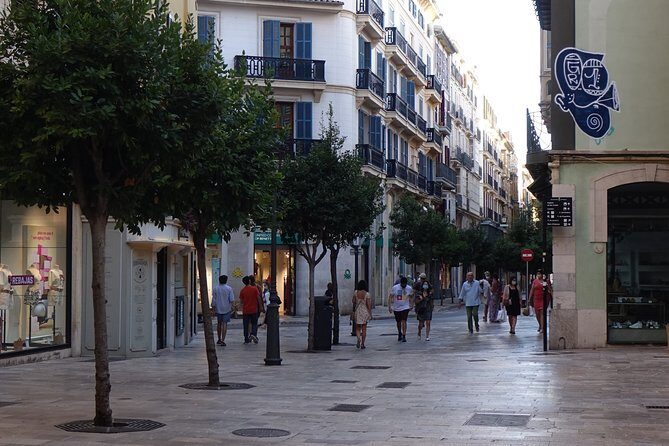
At $9.99 per person, you’re not paying for entry tickets. You’re paying for an organized narrative that connects the major stops and also gives you interpretive context—why each place matters, and how Palma’s different eras talk to each other.
That value works best if you:
- don’t have time for a full guided tour,
- like to read while you walk (or listen while you look),
- and want a route you can repeat later, since you get lifetime access.
You do need a couple of “extras” from your own pocket: the listing setup doesn’t include a phone or headphones, and it doesn’t include food. But the fact that some key stops are free to visit (Santa Eulalia Church and the maritime stock exchange building) keeps your spend from creeping up.
VoiceMap app: how to avoid the most common frustrations
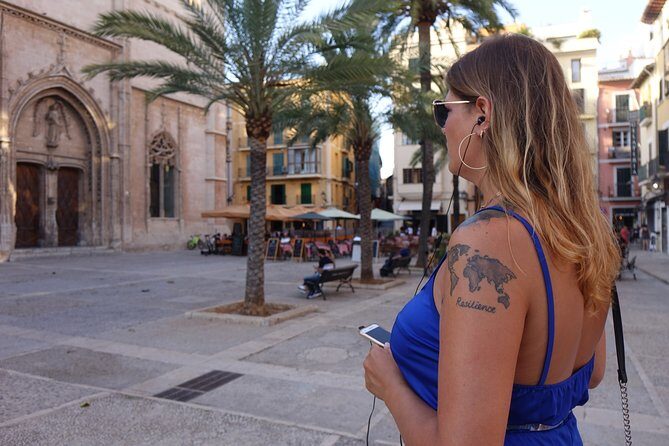
The tour’s success depends on your phone and the app experience. Here’s what I’d do to reduce risk:
- Download for offline use before you go. Offline audio, maps, and geodata are part of the deal, but you only get the benefit if it’s ready ahead of time.
- Use headphones that work reliably. Since you bring your own, pick something you trust.
- Be ready to correct your route if you get off track. The walk is designed as a guided sequence, so if you wander into a side street, it can take extra time to re-sync.
There’s also a downside to plan around: the app can be energetic with battery use, and some people have reported app crashes and the need to restart and reselect the spot manually. I can’t guarantee it will happen to you, but you’ll sleep better if you bring a charging cable and keep battery in mind.
Simple strategy: keep your phone brightness moderate, and if you’re using other apps (like maps), close or pause heavy ones to protect battery.
Who should book this audio walk, and who might skip it
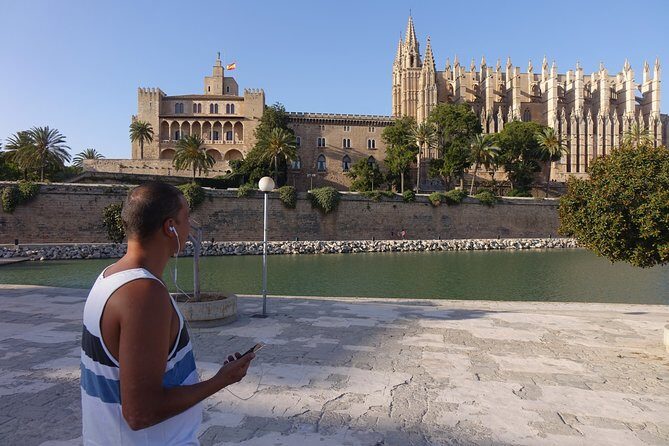
This audio walk fits best if you enjoy:
- independent strolling with guidance,
- a short, story-driven walk through Palma’s core sights,
- and flexible pacing for photos and breaks.
It’s also a good option when you want to explore without committing to a guided group pace. Because it’s private for your group, you don’t have to coordinate around strangers.
You might consider a different option if you:
- hate relying on a phone app while walking,
- want a route where you never need to troubleshoot,
- or you’re the type who prefers a live guide explaining things on the spot.
Most travelers can participate, and it runs at all hours listed (the schedule shows 12:00 AM to 11:59 PM daily). That doesn’t mean every building is open whenever you pass, but it does mean you’re not constrained by the tour’s operating window.
Should you book Palma’s Alternative History audio walk?
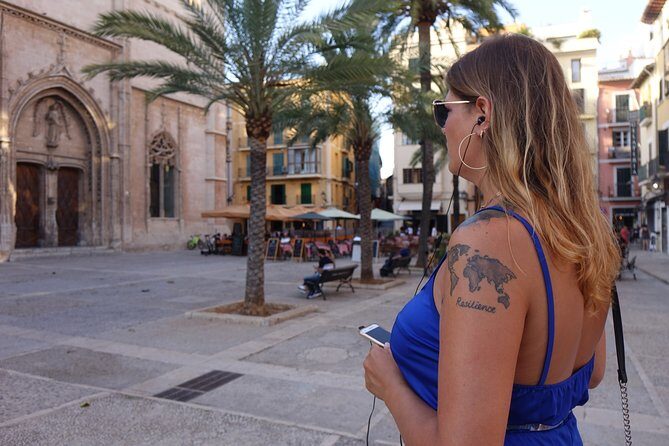
If you’re doing Palma for the first time and you want a quick, high-value route, I’d book it. You get the big monuments, plus context that helps you notice what you’re seeing. The combination of offline audio and a guided sequence through the old center keeps the walk from feeling aimless.
Book it especially if:
- you have about 1 to 1.5 hours for the city core,
- you like history told like a story rather than a lecture,
- and you’re okay using an app as your guide.
One final practical note: the experience is non-refundable and can’t be changed, so make sure you’re good with that before paying. Once you’re set on your dates, it’s an affordable way to turn a walk through Palma into something you’ll remember.
FAQ
How long is the Palma Alternative History audio walk?
It’s about 1 hour to 1 hour 30 minutes depending on how long you pause at stops and squares.
Where does the tour start?
The walk starts at Parque del Mar (Parc de la Mar), Palma, Illes Balears, Spain.
Where does the tour end?
It ends near Plaça de Cort, Centre, 07001 Palma, roughly an hour later near Palma town hall.
What language is the audio offered in?
The audio is offered in English (and lifetime access is available in English or French).
Do I need my own phone and headphones?
Yes. The tour includes the audio access via the VoiceMap app, but smartphone and headphones are not included.
Can I use the audio without cell service?
Yes. You get offline access to audio, maps, and geodata.
Are entrance tickets included for museums or attractions?
No. Tickets or entrance fees to museums or other attractions are not included.
Are any stops free to visit?
Yes. Santa Eulalia Church is free to visit, and the Gothic building used as a maritime stock exchange (1428) is described as admission free.
Is it refundable if my plans change?
No. The experience is non-refundable and cannot be changed for any reason.