REVIEW · MALLORCA
Mallorca: coasteering South
Book on GetYourGuide →Operated by MES AVENTURA · Bookable on GetYourGuide
Fast-moving sea adventure with cliffs and gear.
This coasteering session near Peguera/Calvià mixes 5 jumps into the sea with cliff skills like abseiling, psicobloc (DWS), and even a zipline. The views are a big part of the payoff, and the whole thing is built as a repeatable circuit—so you’re not just “doing one stunt,” you’re working through multiple moments by the coast.
The one drawback you should take seriously: you need real swimming confidence. In open-water sections, there can be chop (and at times you may be without the guide in the water while gear gets handled), so go only if you’re comfortable swimming when you can’t see the bottom and when conditions aren’t glassy.
In This Review
- Key highlights to know before you go
- Where this coasteering happens: Peguera’s cliffy coast
- Your exact start: Hotel Coronado Thalasso & Spa area
- The sea jump sequence: 5 different heights, built to ramp you up
- Psicobloc (DWS): the rope-free crossing that feels both simple and scary
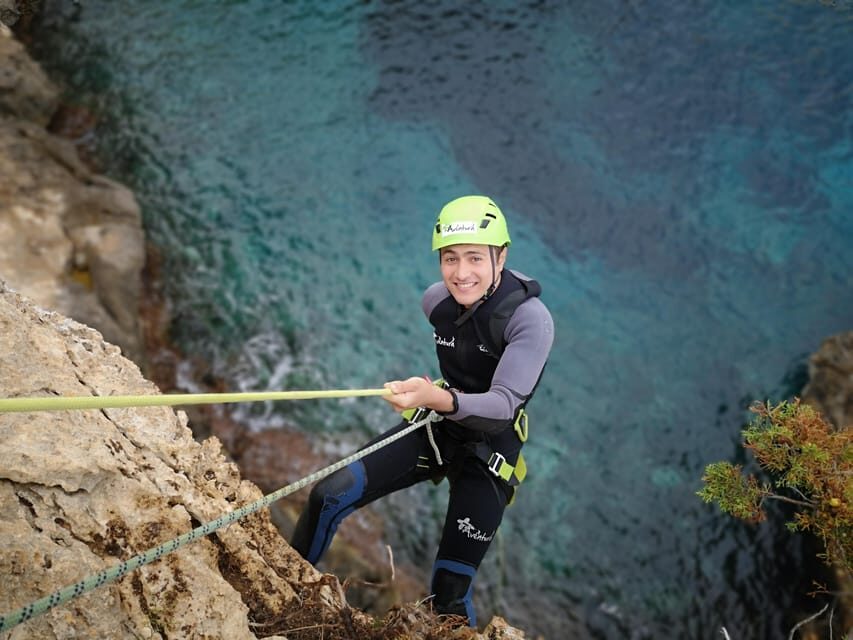
- Abseiling about 10 meters: where technique beats adrenaline
- Zipline to the sea: the fun “finish line” moment
- Safety gear and the real meaning of “trust your guide”
- What the pacing feels like (and why the land steps matter)
- Price and value: $77 for a multi-skill coastal circuit
- What to bring (and the one thing people forget: booties)
- Who this suits best (and who should skip it)
- Language, guides, and how instruction lands
- Should you book Coasteering South near Peguera?
- FAQ
- How long is the coasteering south experience?
- Where do we meet for the activity?
- What’s included in the experience?
- Do I need to be able to swim?
- What should I bring with me?
- Can I skip abseiling, zipline, or higher jumps?
- Is there a minimum experience level?
- How big is the group?
- What happens if conditions are unsafe?
Key highlights to know before you go
- Five jumps (2 to 8 meters): different heights so you can get used to the vertical moment.
- Psicobloc / DWS traverse: climbing without a rope at low sea level.
- Abseiling (~10 meters) plus a zipline: you switch between water, rock, and air.
- Near Calvià (Peguera): a convenient base for a summer coastal adventure.
- Small group (up to 10): more attention when you’re learning new moves.
- High-quality safety gear: designed to let you focus on the fun, not the fear.
Where this coasteering happens: Peguera’s cliffy coast
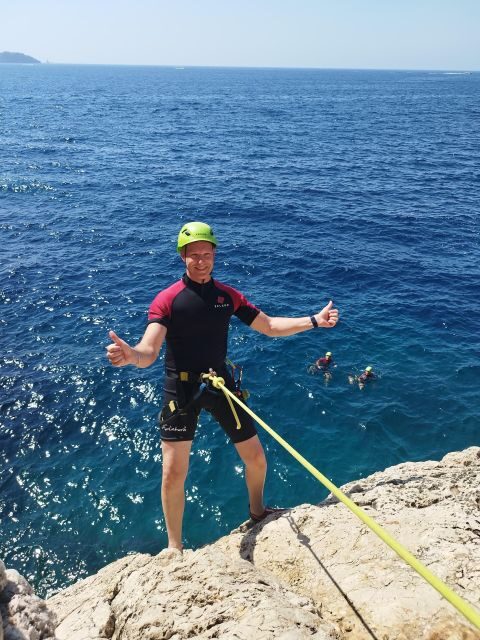
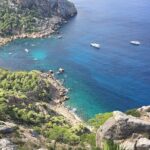
Mallorca’s south coast near Calvià (around Peguera) is the kind of place where the sea meets the rock fast. That matters because coasteering is basically moving along a rugged shoreline—cliffs, ledges, and jumps—without the comfort of a “nice beach route.”
This one is set up as a circuit, so you get a run of coastal moments in about 3 hours. You start from a hotel area and end back at the same place, which is a big deal if you want to keep your day simple. And because the activity is done close to town, you’re not spending half your time on transfers—just enough moving on land to get you to the action.
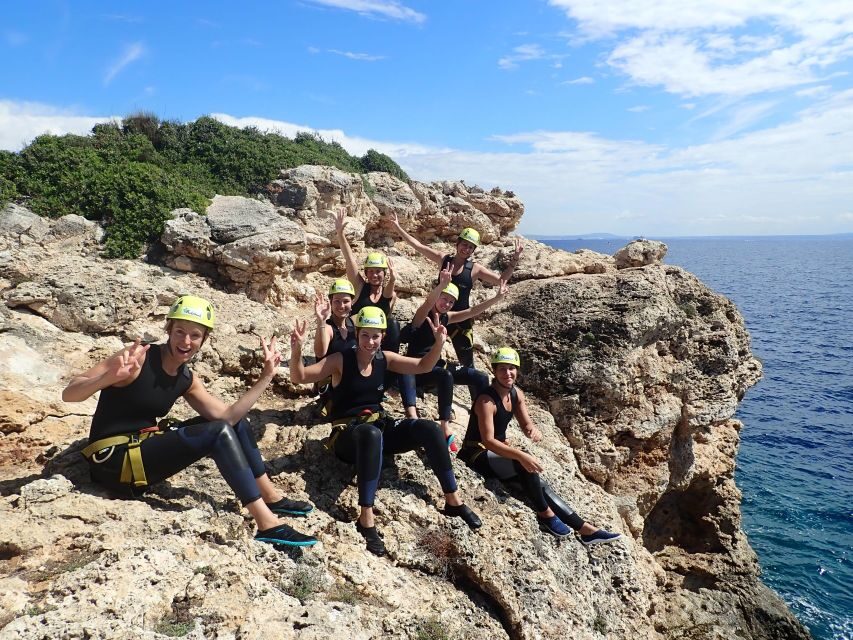
The best part is how varied it feels. You’ll do water jumps, then rock climbing near sea level (psicobloc/DWS), then a controlled descent down the cliff, and finally a zipline back toward the sea. It’s a nice blend of courage and technique—plus constant sightlines out over the coast.
You can also read our reviews of more tours and experiences in Mallorca.

Your exact start: Hotel Coronado Thalasso & Spa area
You meet at the end of the parking St. Cala Fornells, next to Hotel Coronado Thalasso & Spa. The guide is waiting there, and from that point you’re guided the whole time.
The early part is about getting you set: a safety briefing, then a short walk and an outdoor stretch to reach the first jumping point. Even if you feel excited (and you will), this is where you learn how the group moves, how the guide organizes rope-free sections, and what to expect when you’re near the cliff edge.
In practical terms, this is also where you’ll confirm your gear fits right. Coasteering gear can feel odd if you’re not used to it—tight straps, wet-surface grip, and boots that handle slick rock. The better your setup, the more relaxed you’ll feel once the sea starts calling.
The sea jump sequence: 5 different heights, built to ramp you up
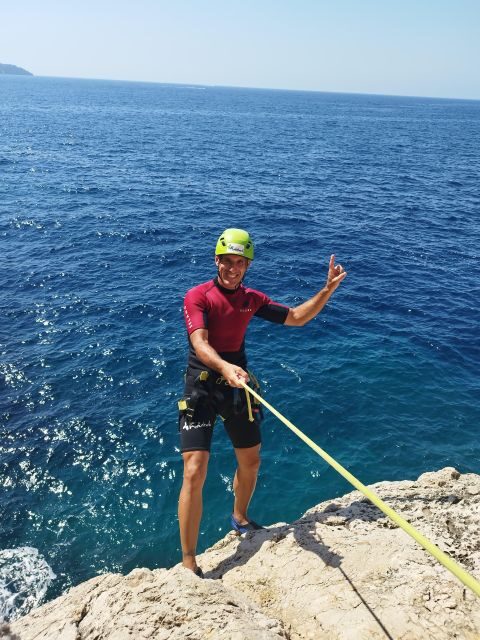
The heart of the day is the 5 jumps into the sea. Each jump has a different height, roughly 2 to 8 meters, so you’re not thrown straight into the biggest drop. For most people, that progression is the difference between a fun start and an anxious first minute.
Here’s what you should pay attention to:
- How you enter the water matters more than the height. A clean entry helps you avoid panicking and helps you recover your breathing fast.
- Your mindset should shift from “fear of the drop” to “trusting your body in the entry.” The guide’s job is to teach the technique, and your job is to follow it.
- Watch the guide and your timing. Even if you’re ready, going out of sync can cause delays or awkward spacing near the rocks.
One very important note from experience-based feedback: this activity assumes you can handle open-water swimming as part of the route. That means longer stretches where the bottom isn’t visible and conditions can change. If waves are up, you’ll still need to swim, regroup, and keep your head clear.
Psicobloc (DWS): the rope-free crossing that feels both simple and scary
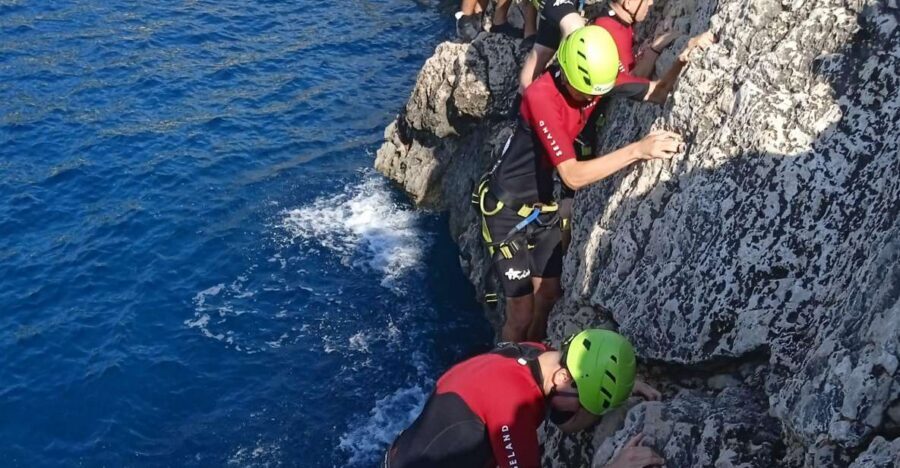
Next comes the psicobloc traverse, also called DWS (Deep Water Soloing). In this context, psicobloc means you climb without a rope at a maximum of about 2 meters from sea level. So you’re not doing long, hanging moves. It’s more like controlled climbing along holds that are close to the waterline.
That sounds safer than it is, and that’s why it’s so intense. You don’t have rope protection, so you have to trust the holds, your grip, and your ability to move smoothly. It’s also very physical in a specific way—small foot placements on coastal rock aren’t like indoor climbing.
What you’ll likely love is the perspective: you’re literally working along the rock with the sea beside you. It’s thrilling because you’re close to the water, but it’s also manageable because you’re not “high and helpless.” You just need calm movement and good attention.
If you’re nervous about any of it, don’t hide it. The guide can adjust approach and pacing, and you can skip other bigger moves (like abseiling, zipline, or high jumps) if you’d rather focus only on what feels comfortable.
Abseiling about 10 meters: where technique beats adrenaline
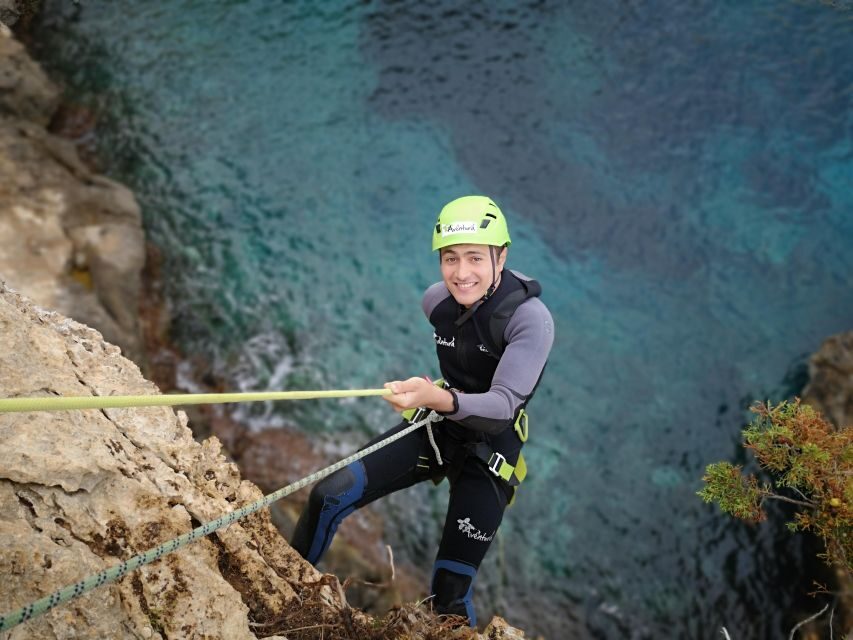
Then you switch to a different kind of challenge: abseiling down about 10 meters. This is classic cliff-control. It’s slower than the jumps and more about body position, braking control, and listening carefully to the guide’s instructions.
What makes it worth doing isn’t just the height—it’s the feeling of control. When you’re abseiling, you’re not guessing. You’re following a system: stance, hand position, and how to descend steadily without sudden jolts.
Because this activity is built for a mixed group, the guide may also help you make the decision in real time. If you don’t want to do the abseil, the activity can be adjusted so you still have a full experience without forcing a move you’re uncomfortable with.




Zipline to the sea: the fun “finish line” moment
The day’s final big adrenaline hit can be a zipline to the sea. It’s the kind of moment that feels like a reward—after you’ve done jumps and climbing, you get to fly down the coast line and land back in the watery world.
A smart caution: coastal routes can change with conditions, and the organizer is allowed to adjust if safety requires it. There’s also the general option to skip certain elements. So treat the zipline as part of the plan, but keep an open mind that the guide may tailor the route on the day.
Even if conditions change, you’re still getting a structured circuit rather than a “maybe we do one thing” outing.
Safety gear and the real meaning of “trust your guide”
Coasteering has a reputation for being wild, but good operators make it feel structured. Here, the experience is built with high-quality safety gear, and you get an early briefing before you’re anywhere near the first edge.
That matters because many people fear the wrong thing. If you’re thinking, Will I survive this? you’re already behind. The better question is, Do I follow instructions and move confidently? Your guide’s job is to manage the route and keep you safe. Your job is to stay focused, communicate if you’re unsure, and use your gear correctly.
One useful detail from personal-style feedback: some people found that the guide spends time preparing or dismantling gear, and there can be moments when you’re swimming while he’s managing logistics. That’s not a reason to panic—it’s a reason to be ready for the water part. Bring that confidence, and you’ll enjoy the day more.
Also: you can’t do this if you’re not comfortable in the water. This is not a “play by the shore” activity. It’s a sea-based circuit.
What the pacing feels like (and why the land steps matter)
The day isn’t just nonstop water time. You’ll have a mix:
- a safety briefing
- a short walk and then time moving along to reach points
- then repeated jumps/climbing/descents
- and finally the hike back to the meeting point area
That land movement matters because it’s part of the experience rhythm. It’s also your breathing space. After a few jumps, your legs will feel it. After psicobloc, your grip and core will feel it. The short hikes let you catch your rhythm while the guide sets up the next station.
You’ll also learn the “coasteering logic” fast: it’s not about running around. It’s about controlled movement along the coast and clean transitions between water and rock.
Price and value: $77 for a multi-skill coastal circuit
At about $77 per person for 3 hours, the value here comes from variety and equipment. You’re not paying for a single stunt. You’re getting multiple different coastal skills—jumps, rope-free climbing at low sea level, abseiling, and a zipline—all in one session, with safety gear provided.
It’s also a good deal because the group size is limited to 10 participants, so you’re less likely to feel like a number. Small groups can mean clearer instruction and more personal attention during the setup.
What’s not included? Food and drinks. So plan to eat before or after. If you arrive hungry, you’ll feel it during the outdoor parts. Bring water at minimum if you have time to grab it before you start.
What to bring (and the one thing people forget: booties)
Bring the basics:
- Swimwear
- Towel
- Sunscreen
- Water
And try to bring your own booties with rubber soles. If you can’t, the operator will provide them. This is one of those “small” items that makes a big difference. Coastal rock can be slick, and good grip helps your confidence in every movement—jumps, scrambling, and the psicobloc section.
No alcohol, no drugs, and no littering. It sounds obvious, but it’s worth stating because this is a safety-first activity.
Who this suits best (and who should skip it)
This is best for you if:
- you can swim confidently in open water
- you want a fast, varied day with sea jumps and climbing skills
- you’re okay with doing multiple activities in the same area rather than long scenic wandering
- you’re willing to listen and follow safety instructions closely
It’s not suitable for:
- non-swimmers
- pregnant women
If you don’t want the biggest-ticket moments—like abseiling, zipline, or jumping from higher places—the route can be adjusted. That’s a big reassurance. You still get a full coasteering experience, just without forcing the move that scares you most.
Language, guides, and how instruction lands
Instruction is offered in English and Spanish. One experience note: a guide named Maria was praised for trying to explain things in German even with limited German skills. That tells you something good about the operation: they adapt communication to help you understand what to do.
For you, the practical takeaway is to ask questions early. If you don’t understand how to enter the water or how to handle the rope-free climbing section, say so. The earlier you clarify, the more relaxed you’ll feel when you’re actually on the rock.
Should you book Coasteering South near Peguera?
I’d book it if you want a compact coastal adventure with real variety—5 sea jumps, psicobloc/DWS, abseiling, and a zipline—and you’re a strong swimmer who’s comfortable with open-water conditions. It’s the kind of experience that makes you feel capable fast, because you learn by doing.
I’d skip it (or wait for a different style of activity) if you’re mainly looking for a scenic walk, or if swimming in rougher water would stress you out. The water part is not optional.
If you’re on the fence, do this simple check: can you swim when you can’t see the bottom, and would you still feel calm if the guide is busy setting something up and you’re swimming briefly on your own? If yes, this is a great value day. If no, protect your trip and choose something more shore-based.
FAQ
How long is the coasteering south experience?
It lasts about 3 hours.
Where do we meet for the activity?
Meet at the end of parking St. Cala Fornells next to Hotel Coronado Thalasso & Spa.
What’s included in the experience?
You get 5 sea jumps (with different heights), a psicobloc/DWS traverse, an abseiling about 10 meters, and a zipline to the sea.
Do I need to be able to swim?
Yes. This activity is not suitable for non-swimmers, and it can involve open-water swimming.
What should I bring with me?
Bring swimwear, a towel, sunscreen, and water. It’s also recommended to bring your own rubber-sole booties, though the operator can provide them if you don’t have any.
Can I skip abseiling, zipline, or higher jumps?
Yes. If you don’t want to do abseiling, zipline, or jumping from high places, you can skip them or the guide can adjust it to your needs.
Is there a minimum experience level?
No previous experience is required.
How big is the group?
The group is small, limited to 10 participants.
What happens if conditions are unsafe?
The activity might be cancelled for safety reasons due to adverse weather or sea conditions, and you’ll be informed in advance. If sea conditions make access to a cave unsafe, the guide can adjust the schedule or modify the route without refunds.