REVIEW · MALLORCA
Coasteering in South Mallorca with Transfers
Book on Viator →Operated by Experience Mallorca S.L · Bookable on Viator
Coasteering turns Mallorca’s cliffs into playgrounds. I love the hotel pickup that gets you moving fast from south Mallorca, and I love the progressive cliff jumps backed by an adventure guide who keeps you moving safely. The one drawback to consider: the approach can be rough, and the sea can be choppy, so you need to pace yourself and accept that your route won’t be a polished walkway.
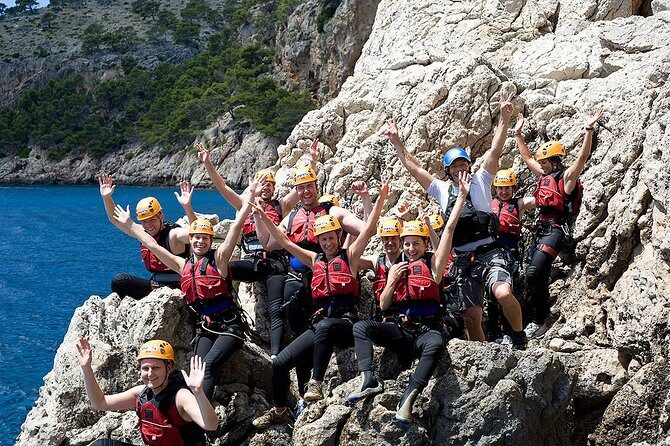
Here’s what makes this outing feel special: you’re not just watching the coast—you’re using ropes, doing cliffside moves, and swimming your way along sea caves and rock formations. Guides like Naco, Joni, Mario, Niko, José, and Rafael show up in this program’s stories, and the common theme is clear: they ease people in, then help you try bigger jumps when you’re ready.
In This Review
- Key things I’d plan around
- What Coasteering Really Is on Mallorca’s Coast
- Getting There: South Mallorca Transfers and the Right Coasteering Zone
- The 4-Hour Flow: Wetsuit On to Zip Line Over the Water
- Jump Heights and Comfort Levels: How Guides Keep It Manageable
- Safety Gear: What’s Included, What to Check Before You Go
- Cost and Value: Is $90.51 Worth It?
- What to Bring (and What You Can Leave Behind)
- Language and Group Size: Small Makes It Better
- Who This Coasteering Tour Suits (and Who Should Think Twice)
- Should You Book This Coasteering Tour in South Mallorca?
- FAQ
- How long is the coasteering experience?
- Is hotel pickup and drop-off included?
- Where is the start point for the activity?
- What coasteering areas does the pickup zone cover?
- What should I wear or bring?
- What’s the minimum age?
- What’s included, and is food provided?
- FAQ
- What language will the guide speak?
- Is there a limit on group size?
- What if I want to do different levels of jumps?
- What safety equipment will I get?
- Is the activity canceled for bad weather?
Key things I’d plan around
- Hotel pickup in southern zones: you meet your driver at your hotel or a nearby point, then transfer to the coasteering area.
- A real skill progression: low jumps and practice moves first, then higher options as you get comfortable.
- Rappel + sea-cave scrambling: expect climbing-style movement and time in and around tide pools and caves.
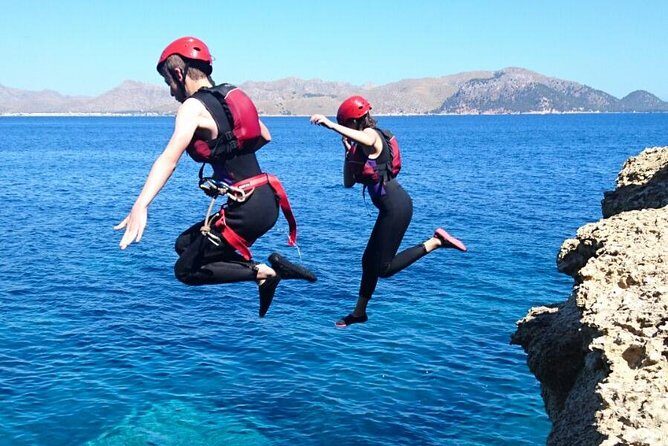
- Cliff jumps from about 2 to 12 meters: thrilling range, with a guide controlling the pace.
- Limited group size (max 10): smaller groups mean more time getting the right instructions at the right moment.
- No food included: bring your own lunch and water so you’re not stressed halfway through.
What Coasteering Really Is on Mallorca’s Coast
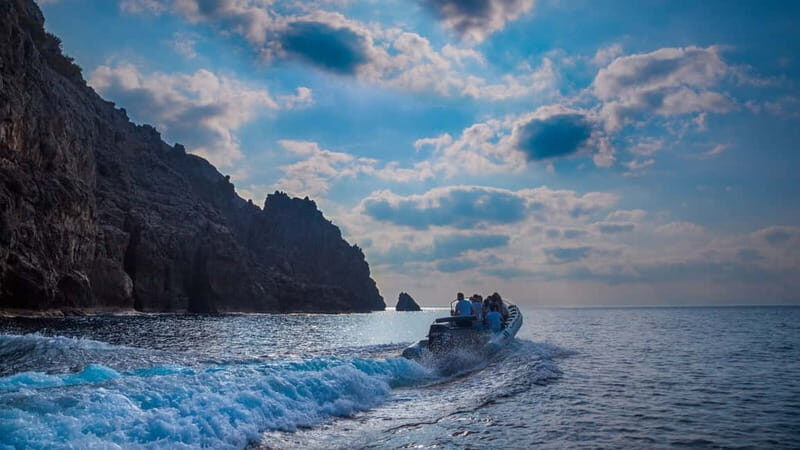
Coasteering is the art of traveling along a rocky shoreline using whatever the coast gives you—climbing up, sliding down, rappelling off cliffs, and jumping into the water when it’s safe and right for your level. On this tour, it becomes a guided “choose-your-own-adrenaline” route where you follow the coastline rather than just hitting one viewpoint.
What I like is that the activity is built to feel like a sequence. You start learning how to move confidently on wet rock, you practice jump entries, then you’re led toward more challenging sections such as higher cliff jumps, exposed scrambling, and optional freerclimb-style climbing over water (often described as psicobloc).
You can also read our reviews of more tours and experiences in Mallorca.


Getting There: South Mallorca Transfers and the Right Coasteering Zone
This is a transfer-included tour with a minivan ride and local routing. Pickup coverage is set by where you’re staying: the program notes that north is for clients in the Alcúdia area, while east is for clients in Cala d’Or and Cala Ratjada. For other south stays, pickup is described along the coast from Puig de Ros to Andratx.
If you’re staying in the south, you may also meet at a central point rather than at your door. One start address is listed at Carr. de Cala Fornells, 30, 07160 Cala Fornells (your exact pickup time and spot depends on your zone), and the activity runs roughly 4 hours total.
Why this matters: coasteering works best when you’re not spending the day lost. A smooth transfer helps you arrive with time to change, listen to safety briefing, and settle your nerves before you hit the first jumps.
The 4-Hour Flow: Wetsuit On to Zip Line Over the Water
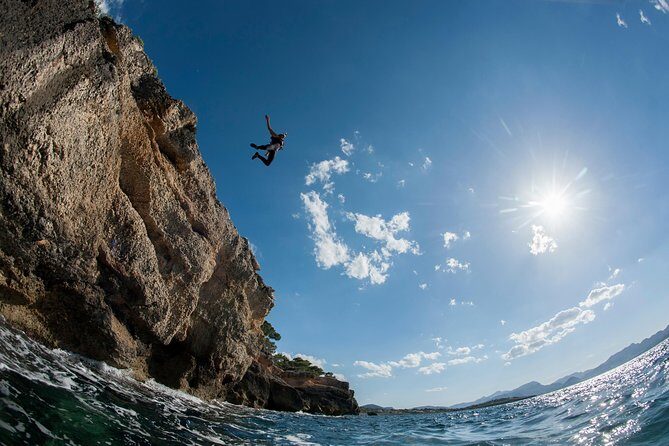
The day has a simple rhythm: gear up, train your movement, then stitch together the coastal highlights into one continuous adventure.
1) Meet and transfer to the coast
You’ll meet a driver at your hotel (or a centrally located departure point in the south). Then you ride out to the coasteering section in the northern part of Mallorca, based on your pickup zone.
2) Change, gear up, and get the safety briefing
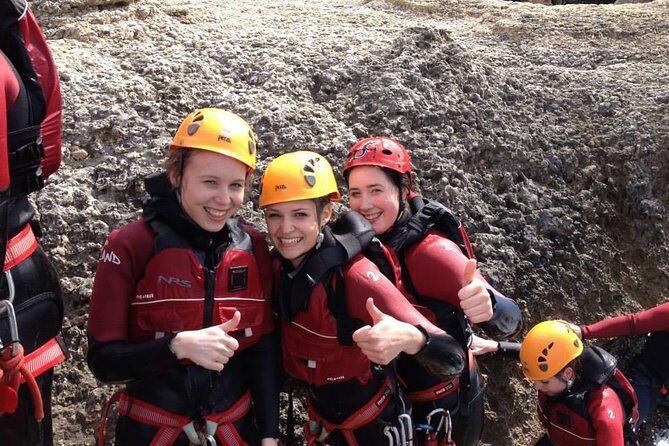
You’ll be outfitted with a wetsuit, helmet, and protective footwear (water shoes). Reviews repeatedly mention that the guides make sure everyone understands how to rappel, climb, and jump—starting with lower jumps so you build a feel for wet rock and water entry.
3) Rappel down, then scramble through sea caves and rock formations
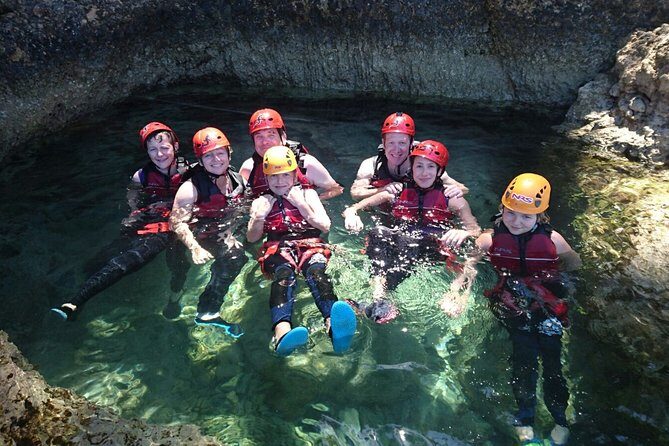
A key moment is learning and using a rope system to lower yourself from a sea cliff. From there, you move along the coast and into areas featuring pools, formations, and cave-like zones where you can see why this coast is famous for its dramatic edges.
4) Cliff jumps with options that scale up
Cliff jumps range from about 2 meters (6 feet) up to about 12 meters (39 feet). One of the best guide patterns described in real sessions is step-by-step progression—practice jumps first, then higher jumps for people who want them.
5) Optional psicobloc or deep-water free solo-style climbing
This is described as climbing with the ocean below, without the protection of ropes in the same way as the rappel moments. If you’re not into that style, you can still do plenty of the route. If you are into it, this is where the tour can feel truly rebellious.
6) Zip line finish (in many sessions)
Many accounts mention a zip line element connecting cliffs, often used as a fun final flourish once you’ve got the “I can do this” feeling going.
7) Return to the start point
You finish back at the meeting point, with the overall adventure typically landing around 3.5 to 4.5 hours depending on conditions and group pace.
Jump Heights and Comfort Levels: How Guides Keep It Manageable
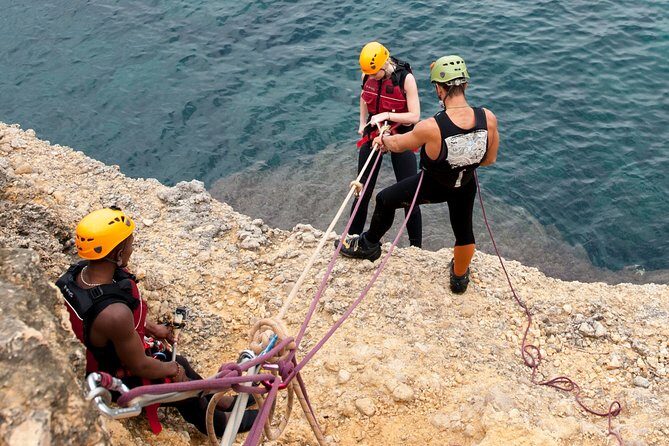
The jump range is part of the thrill. But what makes it actually work for normal humans is the pacing. Multiple guide stories highlight patience and encouragement, with instructions that focus on where to step and how to jump—not just a shout-and-go approach.
If you’re a beginner, don’t assume you’ll be forced into the biggest cliff right away. The tour is structured around training first: you practice from smaller heights, then decide whether to climb the ladder toward higher jumps. One guide is described as easing people into higher jumps gradually, and another as taking first-timers from manageable sections to bigger cliff entries when confidence builds.
If you’re nervous about heights, this still might be your day—but you’ll want to be honest with the guide when you check in. The good news: the route includes plenty beyond jumping, like climbing-style scrambling, swimming sections, and cave and formation exploration.
And if the sea is rougher than expected, expect everything to feel more physical. Reviews include notes that the terrain can be rough and water conditions can add challenge, which means you may need to take it slower than you’d like. That’s not failure. That’s the ocean doing ocean things.
Safety Gear: What’s Included, What to Check Before You Go
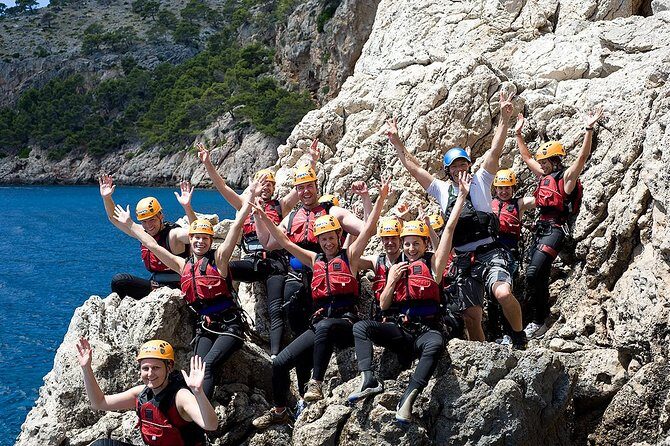
Safety equipment is included, and it’s not a small detail. You’ll get:
- a wetsuit
- helmet
- shoes (water shoes)
- safety gear for the rope/rappel parts
- insurance
- a qualified local guide
Now the practical bit: gear quality can make a difference. One negative note raised concerns about torn wetsuits and poor grip with certain plastic-soled shoes. The response from the operator also says you’re allowed to bring and compare your own footwear, and that the shoes are provided at the van so you can choose.
So here’s my straightforward advice:
- When you’re handed footwear, check grip on the spot you’ll be standing on.
- If you have your own grippy water shoes and you feel uneasy with the provided pair, ask to use yours.
- If a wetsuit seems compromised, speak up immediately.
Also, you’ll go home with saltwater and likely bruised hands. That’s from climbing out and grabbing rock edges repeatedly. It sounds tough, but that’s part of why coasteering feels so real.




Cost and Value: Is $90.51 Worth It?
At around $90.51 per person for about 4 hours, this tour prices like a true activity day, not a sightseeing bus trip. What you get matters:
- hotel pickup and drop-off (with transfers by minivan)
- qualified guide
- all equipment and shoes
- insurance
- a structured adventure with multiple coastal components (rappel, jumps, scrambling, and often a zip line)
What you don’t get is also part of the math: food and drinks are not included. You’re told to bring your own lunch and bottled water, and you’ll want sunscreen on board too.
So the value equation is simple. If you want a guided day that combines several adrenaline-style elements with provided safety gear and transport, this is a reasonable price. If you just want a pretty view, you could do that cheaper. But if you want to move like a coastal athlete, $90.51 starts to feel fair.
What to Bring (and What You Can Leave Behind)
The tour gives you most of what you need, which is a relief. Reviews also repeat a useful theme: you can travel light.
Bring:
- your bathing suit (the base layer under the wetsuit)
- a towel
- sun screen
- bottled water
- your lunch
- comfortable clothes and hiking shoes for the start and approach
Smart extras (from real-world tips):
- a waterproof phone case for photos and videos
- a plan to document the day (some people mention GoPro setups)
Leave behind:
- heavy clothes you won’t use
- extra shoes you don’t need (unless you’re bringing your own for grip)
One more practical note from the instructions: all passenger heights, weights, and shoe sizes must be advised at booking. That’s how they prep the right gear.
Language and Group Size: Small Makes It Better
This activity is offered in English, and confirmation includes that. The fine print says everyone will speak Spanish and English as a minimum, and guides do their best with the language requested.
Group size is capped at 10 travelers, which is huge for an activity like this. You’re close to the guide when you’re changing, briefing, rappelling, and timing jumps. Smaller groups generally mean less waiting and more attention.
It’s also available with morning or afternoon departure, so you can match it to your beach time and rest time.
Who This Coasteering Tour Suits (and Who Should Think Twice)
This coasteering day fits best if you:
- are comfortable with physical effort (climbing/scrambling and getting wet repeatedly)
- can handle height-adjacent moments, even if you start with smaller jumps
- want a guided adventure that mixes rope skills, jumps, swimming, and coastline movement
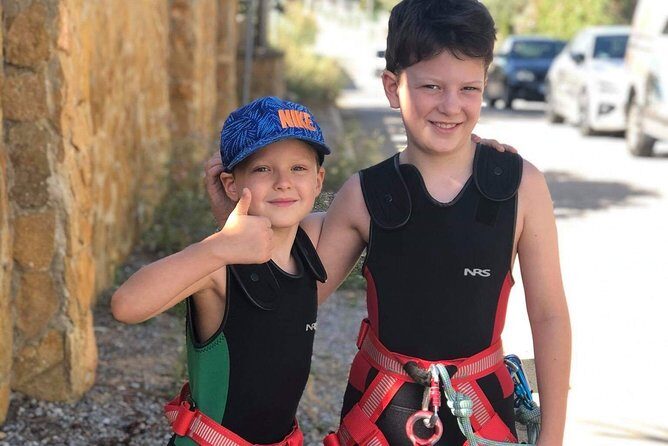
It’s also a great match for active families and teens. One family story describes it working well for a 12-year-old, and the tour’s minimum age is 8 years.
Think twice if you:
- have a strong fear of heights and you’re hoping for a mostly-flat experience
- are not comfortable swimming in open water
- expect a smooth, easy trail the whole way
Even when you do fewer jumps, the route still involves wet rock, climbing out, and physical effort.
Should You Book This Coasteering Tour in South Mallorca?
I’d book it if you want a real Mallorca “do something” experience: sea caves, cliff edges, rappel technique, and the kind of day where you leave tired and grinning. The combination of transfers, provided safety gear, and a structured progression is exactly what makes this style of adventure accessible.
Book with extra care if your idea of a vacation is calm and predictable. Coasteering has rough terrain moments, and water conditions can crank up the challenge. Also, take gear quality seriously—check the shoes and wetsuit on arrival, and don’t be shy about using your own footwear if the provided grip doesn’t feel right.
If you’re ready for the ocean’s version of an obstacle course, this one’s a strong yes.
FAQ
How long is the coasteering experience?
It’s about 4 hours (approx.).
Is hotel pickup and drop-off included?
Yes. Hotel pickup and drop-off are included. Meeting points can be arranged for Air B&B as well.
Where is the start point for the activity?
One listed start point is Carr. de Cala Fornells, 30, 07160 Cala Fornells, Illes Balears, Spain. Pickup also depends on your southern Mallorca area.
What coasteering areas does the pickup zone cover?
The notes say north for Alcúdia area, and east for Cala d’Or and Cala Ratjada. Pickup from areas in the south is described along the coast from Puig de Ros along to Andratx.
What should I wear or bring?
Wear comfortable clothes and hiking shoes. Bring sun screen, bottled water, your lunch, a bathing suit, and a towel.
What’s the minimum age?
The minimum age is 8 years.
What’s included, and is food provided?
Included: all equipment and shoes, a qualified local guide, insurance, and transport by minivan, plus pickup and drop-off. Food and drinks are not included.
FAQ
What language will the guide speak?
English is offered, and the notes state everyone will speak Spanish and English as a minimum.
Is there a limit on group size?
Yes, the tour/activity has a maximum of 10 travelers.
What if I want to do different levels of jumps?
The tour includes progressive cliff jumps and you can follow the guide’s pace. The experience is designed so participation fits different comfort levels.
What safety equipment will I get?
You’ll be provided with a wetsuit and other safety equipment, including a helmet, as part of the included gear.
Is the activity canceled for bad weather?
It requires good weather. If canceled due to poor weather, you’ll be offered a different date or a full refund.